


Currently, the global trade landscape is experiencing turbulence. Geopolitical fluctuations are intensifying economic uncertainty, and the divergence in monetary policies among central banks worldwide has added layers of complexity to capital flows and market expectations. Within this complex and ever-changing context, a critical question for global investors is how to respond to the trend of declining interest rates while seeking certainty amid uncertainty.
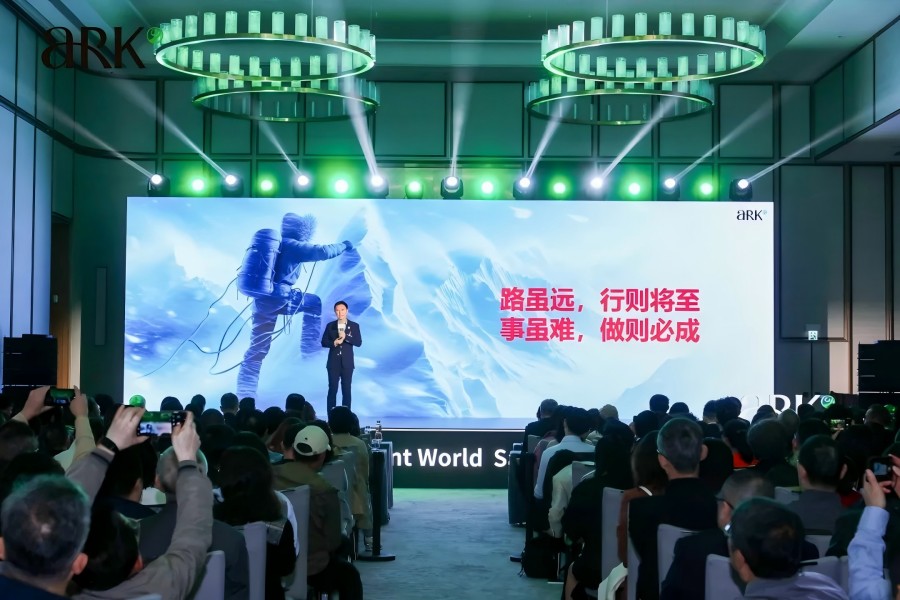
During periods of significant economic fluctuations, strategic adjustments to asset allocation become increasingly vital. As Noah's most prominent annual event and flagship IP, the Black and Diamond Client Summit has been held for fifteen consecutive years. This year, ARK—a newly upgraded wealth management platform designed for global Chinese clients under Noah Holdings—launched its overseas flagship Black and Diamond Client Annual Conference. From November 30 to December 6, the 2024 ARK Black and Diamond Client Global Roadshow began its journey in Victoria Harbour.
This prestigious event brought together global macroeconomists, seasoned scholars, top-tier investment managers, accomplished Chinese entrepreneurs, and founders of listed companies to engage in discussions. They centered around the topics of greatest concern to clients, embracing the new economic cycle, and adjusting wealth strategies, while exploring how to embark on a new age of exploration together.
2025 ARK Hong Kong Spring Special Summit
At this crucial year-end moment, we are excited to announce the ARK Hong Kong Spring Special Summit. This event will bring together leading voices in global macroeconomics, digital asset experts, asset allocation specialists, and key figures in wealth inheritance. Attendees will benefit from practical insights and in-depth discussions.
We sincerely invite you to join us at the ARK Hong Kong Spring Special Summit, scheduled for January 13-14, 2025. (Please see registration details at the end of this article.)

As the global economy faces significant volatility, the European Central Bank, Swiss National Bank, and Danish Central Bank announced interest rate cuts last Thursday. This swift and coordinated action has undoubtedly added momentum to the global wave of monetary easing. Within a single day, these three institutions lowered interest rates in quick succession, clearly sounding the drums for a renewed commitment to accommodative monetary policies. Many now expect this trend to continue into the coming year, as central banks aim to counteract the uncertainties arising from geopolitical tensions and currency volatility.
Before Donald Trump’s second term as the President of the United States, many major central banks had already shifted decisively toward dovish stances, hoping these policies would shield their economies from further disruption.
How to respond to the current wave of interest rate cuts has become a focal point for investors. In a keynote speech titled "How to Navigate a Low-Interest Rate Environment: Experiences from Japan and Europe and China's Response," a renowned economist provided an in-depth analysis of asset allocation strategies in Japan, Europe, and the United States under low-interest conditions. The discussion detailed how various economies are addressing the challenges posed by prolonged low rates through policy adjustments, financial innovation, and global strategies, offering valuable insights for Chinese investors.


Asset Allocation Strategies in the Low-Interest Rate Era: Insights from International Experience
In low-interest environments, how has asset allocation changed for investors? The speech discussed the evolution of asset allocation in various overseas economies during low-rate periods. By comparing the different paths taken by Japan, Europe, and the United States, it provided valuable insights and lessons for Chinese investors.
Taking Japan as an example, the low-interest rate era began with the collapse of its real estate bubble in 1989-1990, ushering in a financial environment characterized by zero and even negative interest rates for the next 30 years. This profoundly influenced the asset allocation of Japanese households, with a significant flow of funds into low-risk assets. At one point, cash savings accounted for 40% of total savings. Despite low yields on government bonds, they still became a core asset in Japan.
"Japan failed to address the real estate crisis in a timely manner, resulting in significant damage to the financial system and household balance sheets, with risks remaining unaddressed for an extended period. If risks are not dealt with promptly, it could lead to a loss of innovation and risk-taking capacity in society."
In contrast to Japan, Europe responded swiftly after the Southern European debt crisis. The European Central Bank implemented decisive measures, including the Securities Markets Programme and low-cost fund injections, which facilitated a faster economic recovery.
"The experience in Europe demonstrates that timely and decisive policy adjustments not only help stabilize financial markets but also promote a shift in household asset allocation, reducing reliance on bonds and cash while increasing allocation to equity assets."
Additionally, the United States demonstrated agility in response to the subprime mortgage crisis by injecting liquidity and supporting emerging technologies. Within five years, the country had successfully navigated the crisis and cultivated new economic growth points. This "simple yet effective" response strategy serves as an important reference model for other economies facing low-interest rate environments.


How Chinese Investors Break the Impasse: Global Asset Allocation Becomes the Mainstream
As the global economy enters a phase of low growth, the persistence of low interest rates has become the norm. Ensuring the stability of financial markets through flexible macroeconomic regulation has become a common challenge faced by countries during their economic development.
For the Chinese market, it is crucial to ensure the stability of financial markets, while also encouraging financial innovation and enhancing risk-taking capabilities.
"The China's capital markets should adopt more flexible macroeconomic regulatory policies, focusing on both incremental control and revitalizing existing assets. By combining international experience with local realities, it can find the best path for robust development."
The speech emphasized China’s need to adopt a global perspective, drawing on successful regulatory strategies from other countries. However, this approach should be tailored to its own circumstances to explore an economic development path that aligns with China's unique characteristics.
In the real estate market, during a low interest rate period, lessons from Japan and Europe underscore the importance of proactive policies. Currently, the main issue for China lies in oversupply and mismatched demand, particularly in third- and fourth-tier cities. Unlike Japan, China still has considerable urbanization potential, which provides a buffer for adjustments in the real estate market. This gives China a relatively ample timeframe to gradually restructure the market and avoid excessive reliance on real estate. Throughout this process, the market must implement more prudent policies to balance short-term adjustments with long-term development goals, ensuring a stable economic transition.
"The adjustment process of the real estate market should emphasize balance and avoid over-reliance on a single policy tool. It is essential to build a more systematic and sustainable policy framework to promote a gradual recovery of the market."
Moreover, as interest rates decline and uncertainties in the investment landscape increase, the risk-averse sentiment among Chinese investors has become increasingly apparent. Asset allocation is quietly shifting, with more savings moving towards low-risk assets. Investors are increasingly seeking products that preserve and enhance the value of their assets, prompting financial institutions to offer more options that cater to the diverse needs of residents.
"The market should support financial institutions in enhancing their capacity for diversified deployment, creating a favorable external environment for stable economic operations."
In this context, the globalization of asset allocation among Chinese investors has entered a new phase of opportunity. The financial market dynamics in Japan and Europe illustrate clear differences in asset allocation strategies and risk preferences. Drawing on the experiences of both economies, increasing overseas asset allocation can help diversify risks and seek higher returns. For example, during Japan’s extended low-interest rate period, some investors capitalized on overseas investment opportunities to lock in high-yield assets, effectively avoiding wealth erosion and achieving wealth growth. Similarly, Chinese investors can optimize their asset allocation strategies, broaden their overseas investment scope, and preserve and grow their wealth.
Compared to focusing on a single market, global and diversified asset allocation allows investors to better manage risks and improve the stability of portfolio returns.
"By reasonably diversifying risks in domestic and international markets, financial institutions can help investors balance market fluctuations and reduce the risk of external economic shocks, thereby creating more opportunities for economic growth."
Maintaining adequate liquidity has become increasingly important for addressing potential market volatility. At the same time, adopting a long-term investment perspective is essential, focusing on assets that can consistently provide stable returns.
Maintaining adequate liquidity has become increasingly important for addressing potential market volatility. At the same time, adopting a long-term investment perspective is essential, focusing on assets that can consistently provide stable returns.
2025 ARK Hong Kong Spring Special Summit
At the 2024 ARK Annual Flagship Summit, clients demonstrated a strong and urgent commitment to exploring emerging trends and embracing the new economic cycle.
As we step into 2025, ARK will continue to walk alongside you on your wealth management journey. We look forward to welcoming you to the ARK Hong Kong Spring Special Summit.