
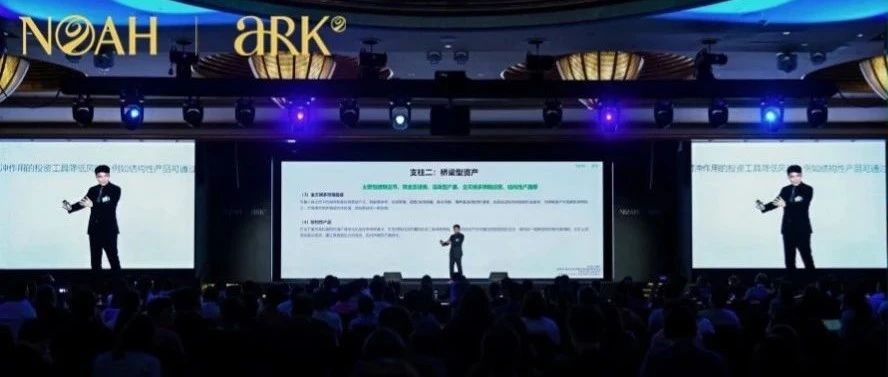

In an era where volatility and opportunity coexist, the future of wealth is no longer defined solely by short-term growth but by forward-thinking, adaptable strategies driven by wisdom. Against this backdrop, the NOAH's ARK Global Chinese Wealth Management and Inheritance Summit gathered global thought leaders to explore cutting-edge trends in wealth management, sparking profound conversations about strategic planning and wealth preservation.
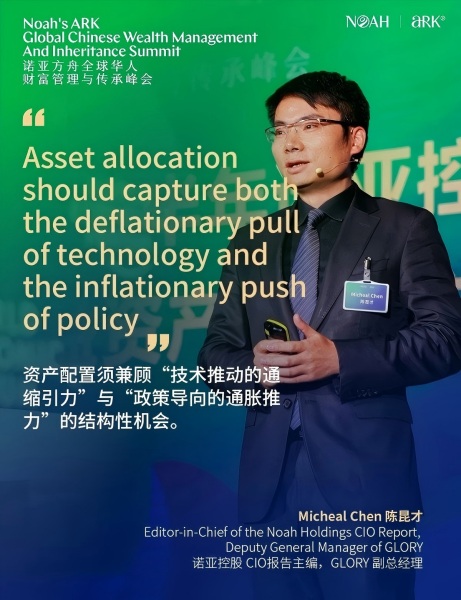
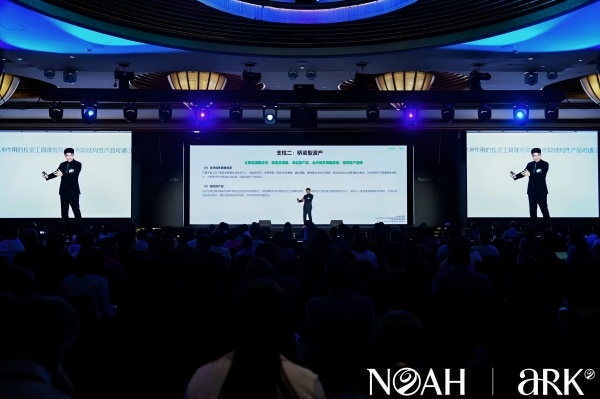
During the summit, Mr. Micheal Chen, Editor-in-Chief of the Noah Holdings CIO Report Deputy General Manager of Glory delivered a keynote speech. He unveiled key insights from the NOAH | ARK H2 2025 CIO Report, analyzing asset allocation in today's economic environment and introducing a new framework: Dual-Benefit Assets and the Three Pillars of Allocation.
In the report, Ms. Jingbo Wang, Founder and Chairwoman of Noah Holdings, stated: "We are entering a new capital era driven by technology-led deflation." She advocated for a transformative shift from inflation logic to a new paradigm of technology-driven deflation in asset allocation.
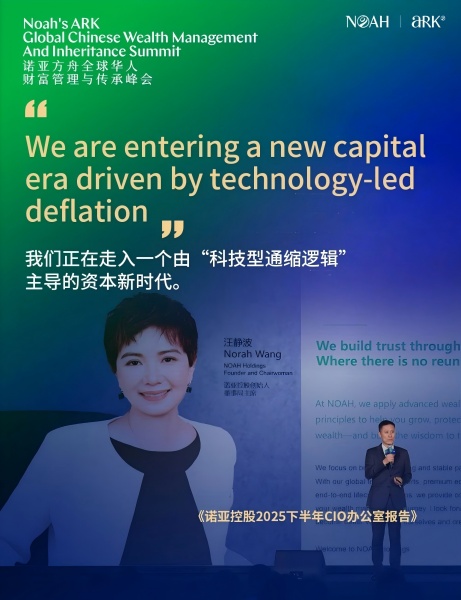
Ms. Wang emphasized, "The future world will no longer be dominated by debt-driven asset bubbles, but by growth engines powered by technology-driven deflation and efficiency dividends. For wealth managers, the key question is not how to avoid deflation, but how to harness the deflationary dividends of technology to restructure portfolios—balancing defensive positioning today with offensive opportunities for tomorrow. True wealth lies not in the speed of returns, but in the strategic alignment of allocations."
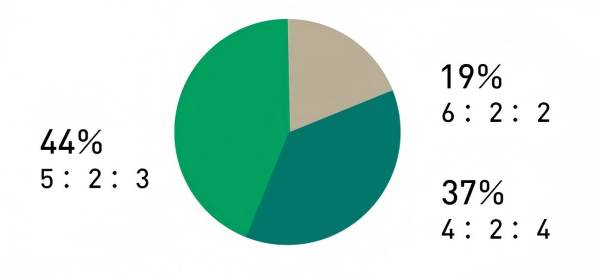
During the summit, Noah ARK conducted an exclusive survey of attendees' asset allocation behaviors and preferences. The findings revealed a "cautiously optimistic" stance among wealth managers. The most popular allocation strategies were bridge assets (44%) and deflation-hedged assets (37%), reflecting a trend among global Chinese wealth managers to balance portfolio flexibility with the capture of technological dividends to navigate volatility.
Which allocation ratio do you prefer for inflation-hedged assets, bridge assets, and deflation-hedged assets?
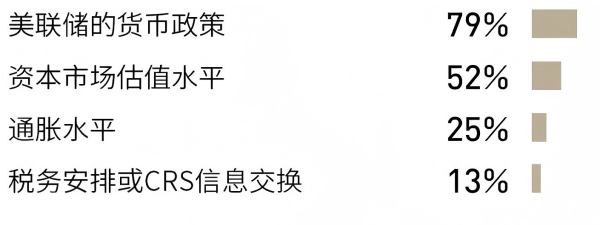
Additionally, the survey found that 79% of respondents view the Federal Reserve's monetary policy as the most important factor in their asset allocation decisions, highlighting the global market's strong dependence on Fed policy.
What factors do you typically consider when planning your asset allocation
portfolio? (Multiple choice questions)
Why Choose Dual-Benefit Assets?
In his speech, Mr. Micheal Chen noted that the global economy is undergoing a profound restructuring, rendering traditional asset allocation models increasingly inadequate. With persistent inflation, uncertain interest rates, and volatile correlations between asset classes, investors face a far more complex landscape. In this environment, single-engine allocation models are no longer sufficient. Investors must adopt more diversified and flexible strategies to navigate turbulence effectively.
The primary goal of wealth management is to preserve and grow value faster than inflation erodes it. Inflation-hedged assets remain a cornerstone of allocation strategies.
However, in today's world of fast-paced technological innovation, technology-driven deflation is emerging as a key long-term economic factor. Wealth managers need to understand this change to successfully navigate the shifting financial landscape.
To address today's market challenges, future asset allocation frameworks must take a dual-track approach—one that can handle both inflationary pressures and capitalize on deflationary opportunities.
What is the Strategic Significance of the Three Pillars of Allocation?

As technology disrupts traditional paradigms, understanding technology-driven deflation has become essential for wealth managers. The new allocation strategy rests on three pillars: inflation-hedged assets, deflation-hedged assets, and bridge assets that enhance portfolio flexibility.
01. Inflation-hedged assets
Inflation-hedged assets remain a critical foundation for addressing current market pressures.Tangible assets like real estate and gold, with their robust defensive qualities, continue to offer strong protection against inflation and currency depreciation risks while providing long-term capital appreciation potential. These defensive holdings form an indispensable foundation for any portfolio.
02. Bridge assets
Bridge assets, such as stablecoins and other digital currencies, are becoming vital components of global allocation strategies. Operating outside traditional financial systems, these decentralized assets offer both inflation resistance and protection against systemic risks while providing enhanced liquidity. To maintain portfolio flexibility, allocations should include stablecoins, often referred to as "on-chain cash" in cryptocurrency transactions, alongside fiat-based cash, short-term bonds, and multi-strategy investment funds. This approach equips portfolios with all-weather rebalancing capabilities, enabling proactive management in uncertain environments.
03. Deflation-hedged assets
The deflationary trend driven by technology is reshaping asset allocation logic and value assessment systems. Assets like Bitcoin and AI-driven investments, powered by transformative efficiency gains and structural cost reductions, are becoming focal points for forward-thinking investors. These deflation-hedged assets are not only able to offer cycle-resistant growth potential, but also serve as high-elasticity engines in future portfolios.
Embracing the New Asset Allocation Paradigm: Building a Flexible and Resilient Wealth Defense
Amid global economic volatility, wealth managers can no longer rely solely on traditional asset classes. Success requires a multidimensional approach built on three pillars: inflation-hedged assets, deflation-hedged assets, and bridge assets. This framework creates portfolios that can weather market cycles while delivering sustainable growth. This approach not only mitigates short-term market volatility but also lays a solid foundation for long-term wealth growth and intergenerational wealth transfer.
The ultimate goal of wealth management is not merely to maximize short-term returns but to establish a robust wealth foundation for future generations through forward-thinking strategies and disciplined allocation. In this era of uncertainty, investors must adopt a global perspective and a more holistic view of wealth management's long-term objectives. By building a wealth system capable of navigating cycles and uncertainties, investors can confidently progress through complex economic landscapes and families can confidently secure their financial legacy for generations to come.