

The vast expanse of the global market can only be fully appreciated through personal exploration. As the key variables of the year come into focus, the world is gradually emerging from the fog, moving toward clarity. The global trade landscape is on the verge of a significant transformation, with geopolitical tensions creating long-term effects, while the start of a rate-cutting cycle signals a major shift in global monetary policy. In the face of a downward interest rate trend, savvy investors are actively seeking new strategies for asset allocation.
On November 30, the 2024 ARK Black & Diamond Global Summit kicked off in Hong Kong. At this summit, we were honored to invite forward-thinking experts in global macroeconomics, senior scholars, top asset management giants, successful Chinese entrepreneurs, and founders of publicly listed companies. Together, they gathered to focus on the hottest topics of concern for clients today, exchange ideas, embrace the new cycle, adjust wealth strategies, and discuss how to embark on a new age of exploration.
As the year draws to a close and a new one begins, we are hosting the ARK Hong Kong New Year Special Summit. We will invite even more global macroeconomic leaders, experts in digital assets, major asset allocation specialists, and key figures in wealth management to share practical insights and engage in productive discussions.

Throughout history, technological revolutions and geopolitics have always gone hand in hand, together shaping the development of global power structures. The force of technological innovation has surged like a tidal wave, continuously impacting traditional social and economic structures, while geopolitics, like an invisible hand, allocates resources and defines spheres of influence across the globe. The interaction between these forces has created profound and complex consequences worldwide.
Today, we are at a critical historical turning point. The twin challenges of de-globalization and the rapid rise of artificial intelligence are reshaping the political and economic landscape. These two forces will reshape the global political economy and have a profound impact on all aspects of life.
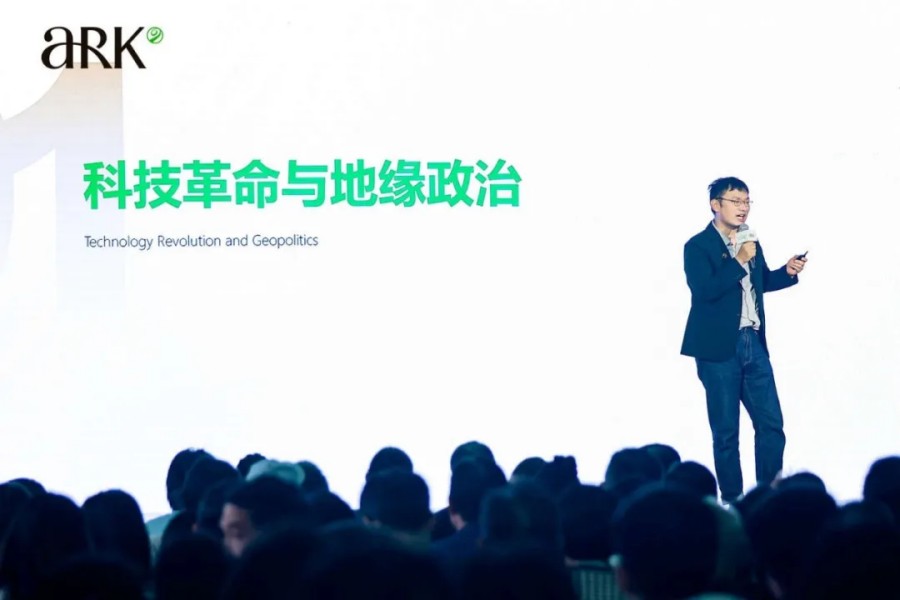
In the segment titled “What Do De-Globalization and AI Revolution Mean?” Zhang Xiaoyu, a researcher at the The Academy for World Watch (AWW) and author of The Trilogy of Civilization, explained that market-tested technological innovation has led to the current tech revolution, which is now set to spark profound societal changes. With the dual impacts of de-globalization and the AI revolution, the global market is on the brink of deep transformation, bringing multiple challenges to international trade and asset allocation.

Zhang Xiaoyu
Researcher at the The Academy for World Watch (AWW)
and author of The Trilogy of Civilization
Key Insights from Zhang Xiaoyu:
“With the development of AI technology, international politics may no longer center around issues of national debt, but rather focus on managing internal conflicts triggered by AI—particularly the conflict between the 99% of people likely to be replaced by AI and the 1% who control it.”
Historical Echoes and Prophetic Visions:
Profound Change Is Quietly Unfolding
The world may be on the brink of profound change, much like other major shifts in history. We are poised for another transformation likely driven by a technological revolution.
“Science and technology are the primary productive forces” and “technological revolutions can trigger profound societal changes” are widely accepted views. However, this presentation offered a thought-provoking perspective: in human history, about 95% of technological innovations were eventually forgotten. Only a few that survived market testing had the chance to become the driving force of global change.
For example, the steam engine, considered one of the most significant inventions in human industrial history, existed as early as 2,000 years ago in the Roman Empire, where it was known as a pneumatic ball. At that time, under the slave-based system, there was no need to pay wages, so these technological innovations remained in the laboratory and never made it to mass commercialization. It was only during the British commercial revolution that the steam engine began to truly transform society. High wages and workers’ aversion to hard labor incentivized engineers to develop coal-powered machines, leading to widespread adoption of this groundbreaking technology.
This technological breakthrough ultimately contributed to the Industrial Revolution, transforming society and bringing about massive disruptions. Technological innovation, tested by market realities, led to a deep social and economic transformation.
Beyond the transformation of the economy, technological revolutions also drive political change. The advent of railways, for instance, revolutionized not just transportation but also the mobilization of troops, which greatly improved the efficiency of sending people and supplies to the battlefield.
This ability to mobilize resources helped usher in universal suffrage and liberalism after World War I, as people realized that they granted governments power through their votes, but government actions, mediated by railroads, had led them to war. Thus, the two most important historical periods of the 20th century—universal suffrage liberalism and the revolution of the working and peasant classes—were closely related to the development of railroads.
Looking back at modern history, the interplay between technological revolutions and geopolitics can be broken down into several key phases. The first phase saw maritime nations at the forefront of technological advancements, establishing their dominance. The second phase marked the relative decline of these maritime powers, as land-based nations began to rise, sparking geopolitical tensions. In the third phase, while land-based countries made substantial strides in technology, maritime nations retained their competitive edge due to their flexibility and innovative capacities.
Today, with the rapid development of information technology, software innovations, and AI, we find ourselves on the brink of a new technological upheaval. These emerging technologies hold the potential to dramatically reshape both economic and political landscapes, a trend we must closely examine and fully comprehend.
The Rise of AI: The Global Political and Economic Landscape Faces Multi-Dimensional Shocks
The rapid development of AI technology is widely seen as a key force driving profound changes in both political and economic systems. As AI continues to advance and expand its applications, it holds the potential to reshape not only our daily lives but also the global power structure and resource distribution.
AI operates based on three key principles: Tokenization, Embedding, and Attention Mechanisms.
By using these principles, AI can understand and generate human language based on historical usage patterns. With the swift progress of AI, particularly breakthroughs in generative large language models, humanity’s framework for the mass-production of intelligence is being transformed. AI now outperforms 99% of humans in intellectual tasks, leading to the mass obsolescence of jobs. As AI becomes more widespread, 99% of the population may find themselves redundant, a dilemma that is as much a social issue as a technological one.
This AI revolution, unlike previous technological advancements, directly creates intelligence and sharpens social and class divisions, intensifying competition between nations. This transformation will have a profound impact on social structures and national policies, with every country needing to face the challenge of adapting to the AI era.
As AI technology advances, international politics may shift focus from traditional issues, like national debt and diplomacy, toward managing internal conflicts exacerbated by AI. A major concern is the growing divide between the 99% of people who may be replaced by AI and the 1% who control and benefit from it.
From a national perspective, AI will likely become a critical area of competition among countries. Nations that master AI technology could gain a dominant position in global politics and economics. AI could also change the way global supply chains operate, increasing efficiency while potentially reshaping them regionally due to technological barriers.
As these barriers emerge, we may see a restructuring of supply chains, with some regions gaining concentration due to technological advantages, while others face marginalization due to a lack of technological capabilities. This shift will affect not only the structure of supply chains but also broader economic and social dynamics, including shifts in employment and changes to global trade patterns.
De-Globalization: The Rising Tensions in Global Supply Chains
Beyond the AI revolution, de-globalization is another significant factor driving deep transformation in contemporary society.
The reversal of globalization is not just a localized or national issue—it is a global phenomenon. A reduction in foreign direct investment is one of the clearest signs of this shift.
At its core, globalization is a system that facilitates the free flow of capital, technology, and talent. This system connects economic activities across developed and developing regions, enabling capital to flow from competitive markets in developed economies to less competitive emerging markets.
However, globalization is not only about the movement of capital, technology, and people; it also involves a key factor—violence. When violence disrupts systems that were once able to efficiently allocate resources through market mechanisms, it causes disorder and prevents systems from functioning properly.
De-globalization could change the global competitive landscape. Some countries or regions may gain competitive advantages due to protectionist policies, while others, relying on the global market, could find themselves at a disadvantage.
On a practical level, de-globalization could impact global supply chains, making it more difficult for countries to access energy and raw materials. For nations that are highly dependent on imports, this could disrupt industrial production and destabilize economies.
The Uncertainty Ahead: Diversified Asset Allocation as the Key to Navigating Risks
In the context of de-globalization, how will different regions be impacted?
From a geopolitical perspective, North America is unlikely to escape the shockwaves, facing challenges such as high inflation and social division. However, North America also benefits from significant advantages and may have the potential to emerge from this crisis and lead the way to recovery.
By contrast, Europe, mired in geopolitical complexity, faces a broader decline, although this period of decline may also present opportunities for reinvention. Historically, regions close to the ocean and strongly connected to the Western Hemisphere have been better positioned to thrive during times of regional decline by adhering to free-market principles.
Looking at specific regions, Europe has long relied on Russian energy supplies and access to East Asia’s vast markets. But as Europe’s structural challenges grow, these pillars are weakening rapidly.
Japan’s situation is somewhat more optimistic. Despite facing challenges such as a rapidly aging population, which places immense pressure on the labor market and social systems, Japan has an opportunity to leverage its advantages in certain industries. Japan’s technological development may lag behind China in some areas, especially in emerging technologies. However, it is experiencing a resurgence similar to the "revival of the First Island Chain" of the past. While the growth potential of this cycle may not be as high as previous ones, Japan’s economy still holds the potential for growth compared to the "lost 30 years." Japan is likely to find new areas of cooperation and growth in a changing regional economic landscape, further consolidating its strengths in certain industries and enhancing its competitiveness in the global economy.
China, too, faces significant challenges, including shifting demographics, disruptions to global supply chains, and increasing geopolitical risks, all of which could create significant headwinds.
However, as history shows, the rise and fall of nations is cyclical, and the strength of a people endures. Despite the challenges China faces, the remarkable ability of the Chinese people to control global supply chains and information technology platforms has propelled China to the forefront of global leadership. Even amid fluctuations in globalization, the immense potential of the Chinese people should not be underestimated. With greater resources at its disposal than ever before, China’s success will depend on whether it can effectively utilize these resources and stay in tune with the rapidly changing global environment.
Given the current geopolitical uncertainty, diversified asset allocation has become an essential strategy for managing risk. By diversifying investments, one can reduce the impact of single-point failures and maintain stability in the face of unforeseen events. Diversification enhances resilience, helping individuals and institutions adapt to a dynamic and unpredictable global landscape.