
N+ Reading connects not only with books but also with authors and publishers, bringing to light the ideas and wisdom they impart. Our mission is to leverage top-tier resources to share this knowledge with our clients, enabling them to grasp the latest trends in economics, social sciences, culture, and theories, ultimately benefiting from these learnings.
Noah recognizes that exploration, communication, and listening breathe life into reading. We began considering ways to connect these elements with like-minded individuals who share the same passion for reading through the Enoch Bookstore.
Following appearances by the "Internet Godfather" Kevin Kelly
and renowned economist Richard Koo,
we are pleased to invite Lars Tvede,
a leading global AI technology investor,
as a guest speaker at the Enoch Bookstore where he
outlined his international forward-looking perspective
and offered cutting-edge insights.
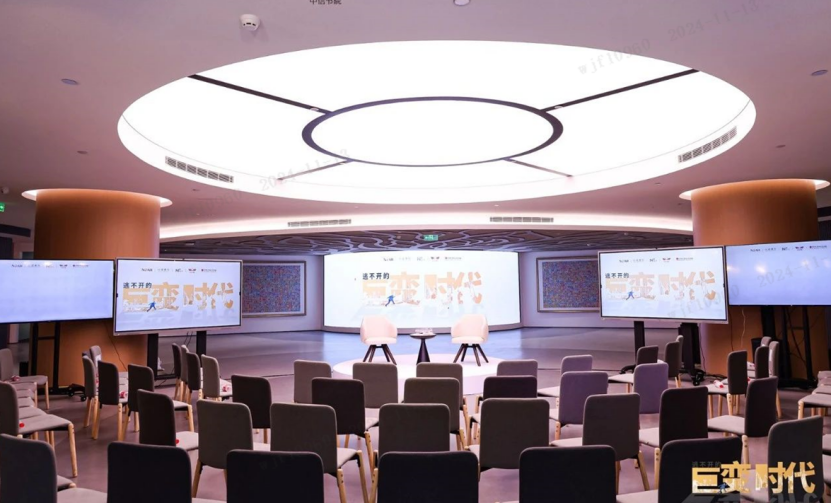
In today's rapidly evolving global economic and political landscape, we face unprecedented challenges and opportunities. To achieve prosperity in this fast-changing era, we must prepare for uncertainty when it comes to environmental, technological, and economic cycles. Whatever you do, having a clear understanding of the future will create endless possibilities.
Economies constantly oscillate between growth, recession, and crisis — from expansion, confidence, and excitement to overheating, turbulence, stress, and stagnation. The cyclical nature of oscillating from prosperity to depression leads us to frequently fall from optimistic peaks into depths of disappointment before rising again, depending on the circumstances. How should we understand and predict these economic cycles? What mechanisms create the cycle of prosperity and crisis? How can we identify genuine long-term opportunities during economic downturns?
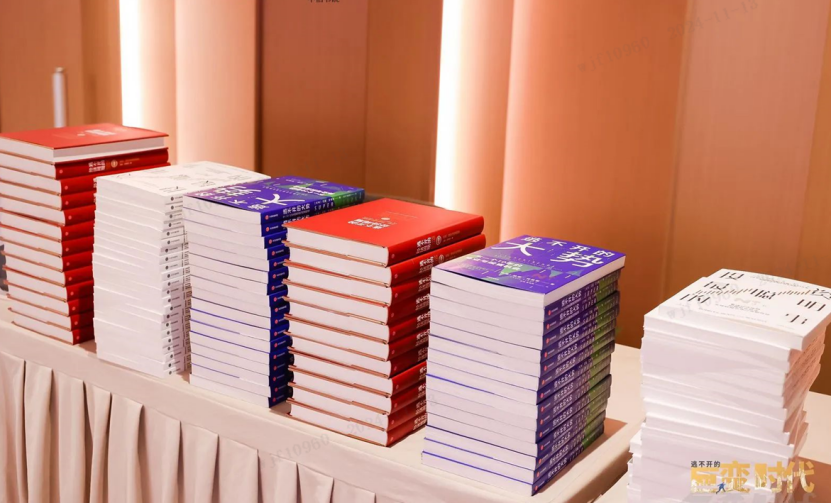
In this session of the Enoch Bookstore N+ Reading Club jointly organized with CITIC Academy, we are excited to welcome Mr. Lars Tvede. Mr. Tvede is a registered financial derivatives trader with the National Futures Association (Chicago), an entrepreneur, and an investor who has conducted extensive research on economic cycles and trends while also founding technology companies.
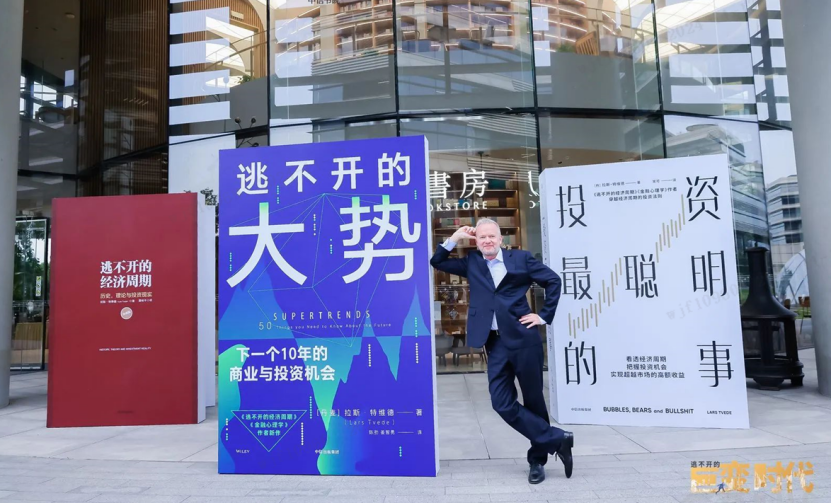
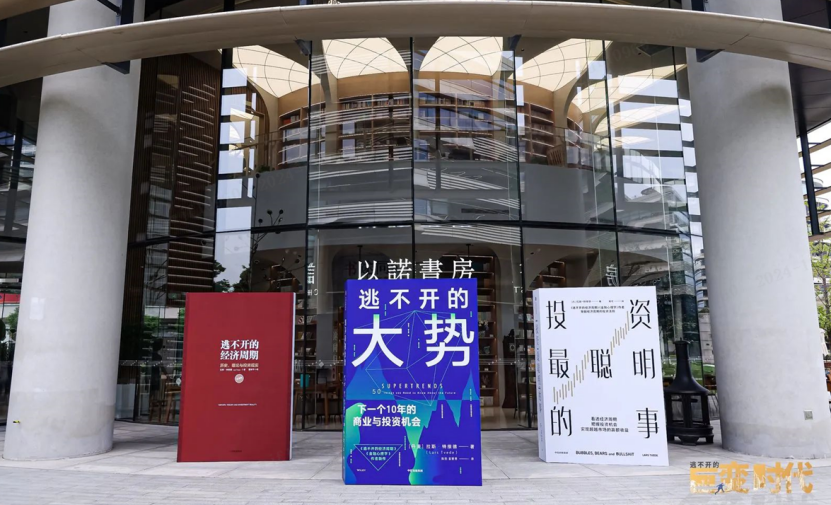
Mr. Lars Tvede posing in front of Enoch Bookstore with three of his translated books
Mr. Zander Yin, co-founder and CEO of Noah Holdings and chairman of Gopher Asset Management, delivered a welcome speech to the attendees. Mr. Yin emphasized how the relationship between Noah and its clients transcends investment and wealth management; it aims to help clients understand objective principles through interaction and communication. The purpose of the N+ Reading Club is to invite renowned authors and engage in deep discussions that enhance thinking and learning.
Mr. Yin also pointed out that capitalizing on trends and understanding market dynamics and human nature are two key aspects of investing. We are currently in a crucial period of transformation for asset allocation that requires an understanding of market changes - especially in technology – which serves as an important background for this discussion.
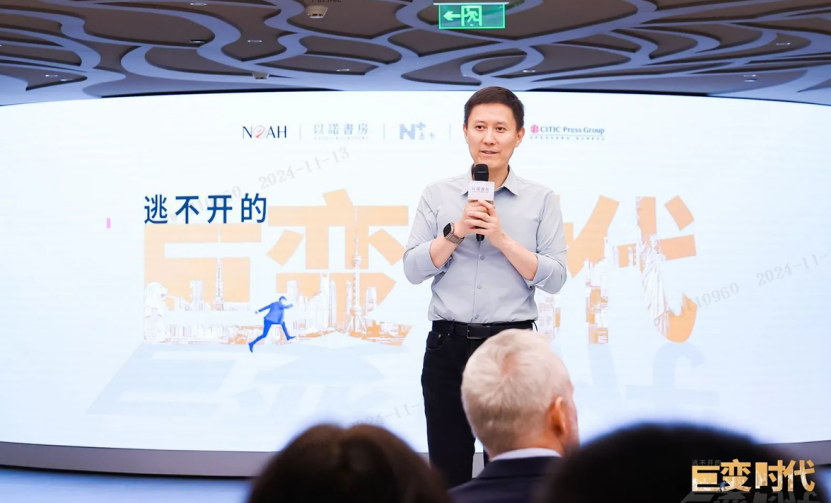
Mr. Zander Yin, co-founder and CEO of Noah Holdings and chairman of Gopher Asset Management
Super trends
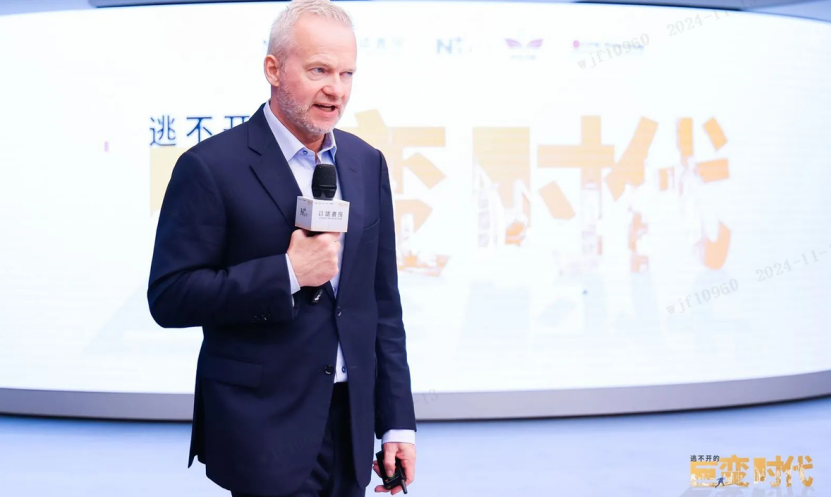
Mr. Lars Tvede, a leading global AI technology investor
In his keynote speech titled "Super Trends," Mr. Tvede explored the development trends of cutting-edge technologies such as AI, quantum computing, robotics, and nuclear fusion, analyzing their profound impact on the global economy, particularly in China.
Mr. Tvede foresees a future where each of these cutting-edge technologies will play a pivotal role. The growth prospects for the global economy – especially in China - are optimistic, with potential for sustained prosperity in the coming decades.
1. The Rapid Development of AI
AI is advancing at an unprecedented pace. By 2025, it is expected to achieve 1,201 different breakthroughs in technology and science. The advancements are not only in algorithm optimization but also in deep integration across various industries - from healthcare to financial investment - continuously expanding its influence.
2.The Potential of Quantum Computing
The development of quantum computers reflects a revolution in computing power. In the coming years, they are expected to perform complex calculations beyond traditional computers’ capabilities, ushering in a new phase of technological innovation.
3.The Widespread Application of Robotics
As robotics technology matures, its applications in daily life are becoming increasingly prevalent - from simple household assistants to complex industrial production lines - transforming our work and lifestyles.
4.Breakthroughs in Nuclear Fusion Technology
Nuclear fusion is seen as a critical solution to future energy challenges. With ongoing research advancements, it is anticipated that nuclear fusion will achieve commercial application within decades, providing nearly limitless clean energy.
5.Macroeconomic Growth Trends
At the macroeconomic level, advancements in AI and other cutting-edge technologies are expected to significantly boost global economic growth rates. Particularly in China where rapid innovation will strengthen its position in the global economy.
Dialogue: Living in the Age of AI
With AIGC sweeping across the globe, capital markets are booming as well. In its CIO report for the second half of 2024, Noah emphasized that technological development is accelerating towards a "technological singularity" where AI surpasses human intelligence. The singularity will bring unprecedented technological advancements, transform society, and address many challenges facing humanity today – ushering us into a "new industrial revolution."
Mr. Ye Gang, Senior Investment Director of Gopher Private Equity's Investment Department and head of Gopher's U.S. VC products, joined Mr. Tvede on stage for an engaging roundtable discussion.
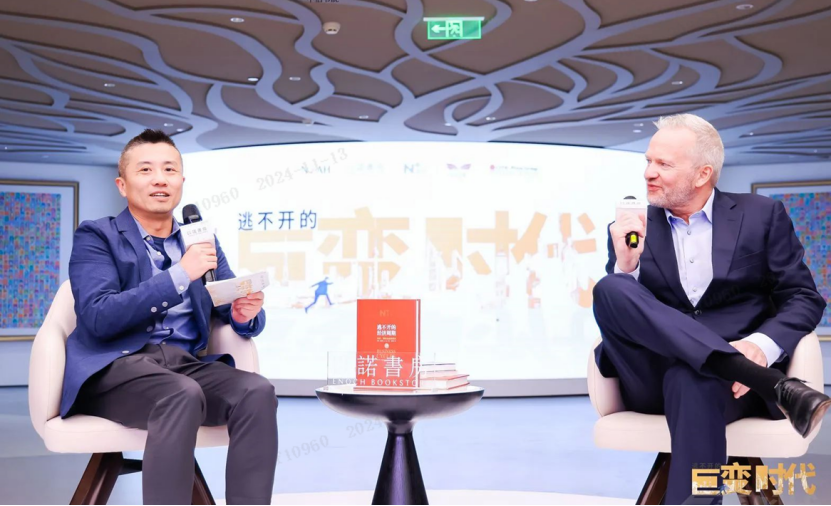
Q: If you had a time machine and could go back to an earlier time in your life, which period or stage of your career would you choose? Why?
Tvede: I enjoyed every moment in my career as they unfolded. Each one was a unique journey, especially when I founded a company or created a product.
Q: You quoted Eden Philpott by saying "The universe is full of magical things." What exciting technologies do you foresee for the future? How can we identify potential long-term investments?
Tvede: One obvious area to invest is in foundation models; that would be a good strategy, but they are not cheap. In some ways, these models are commodities.
AI offers cheaper, better, and faster products, along with thousands of possibilities. I believe there is also a lot of potential in venture capital. In fact, when looking for truly scalable businesses, we often go back to large, leading companies.
Q: Will AI benefit humanity or pose risks?
Tvede: I believe that in the future, superintelligent AI will surpass or compete with humans on various levels. All forms of AI will yield both positive outcomes and challenges while promoting greater equality among us and significantly enhancing productivity.
Q: Is there a valuation bubble in the AI industry?
Tvede: Current valuation levels are not particularly high. American companies generally have price-to-earnings ratios between 25 to 30 while Chinese companies are lower - making Chin’s market relatively inexpensive at present.
Q: I graduated from university in the mid-90s and have experienced several economic cycles, including the dot-com bubble, 9/11, and the 2008 financial crisis. Are we currently in a new economic cycle?
Tvede: Different regions globally exhibit different conditions. I believe that in the U.S., there is a 20% chance of an economic contraction. However, as inflation eases, the Federal Reserve may cut interest rates to avert an economic recession. The U.S. consumer remains strong, so I think we are unlikely to fall into a severe economic downturn. On the other hand, China's potential for long-term structural growth is significant.
Q: As a long-time entrepreneur and venture capitalist, you are very familiar with wealth. What are your observations and thoughts on wealth and life?
Tvede: First is compound interest. If you continue to invest as early as possible and keep reinvesting over the long term, you will do very well.
Second is happiness. There is a strong correlation between the feeling of happiness and the feeling of freedom. The feeling of freedom is living life the way you want. Economic freedom is a part of that. You can work for yourself and do anything you want, so I believe this is a way wealth creates more happiness—to generate more freedom for oneself.