
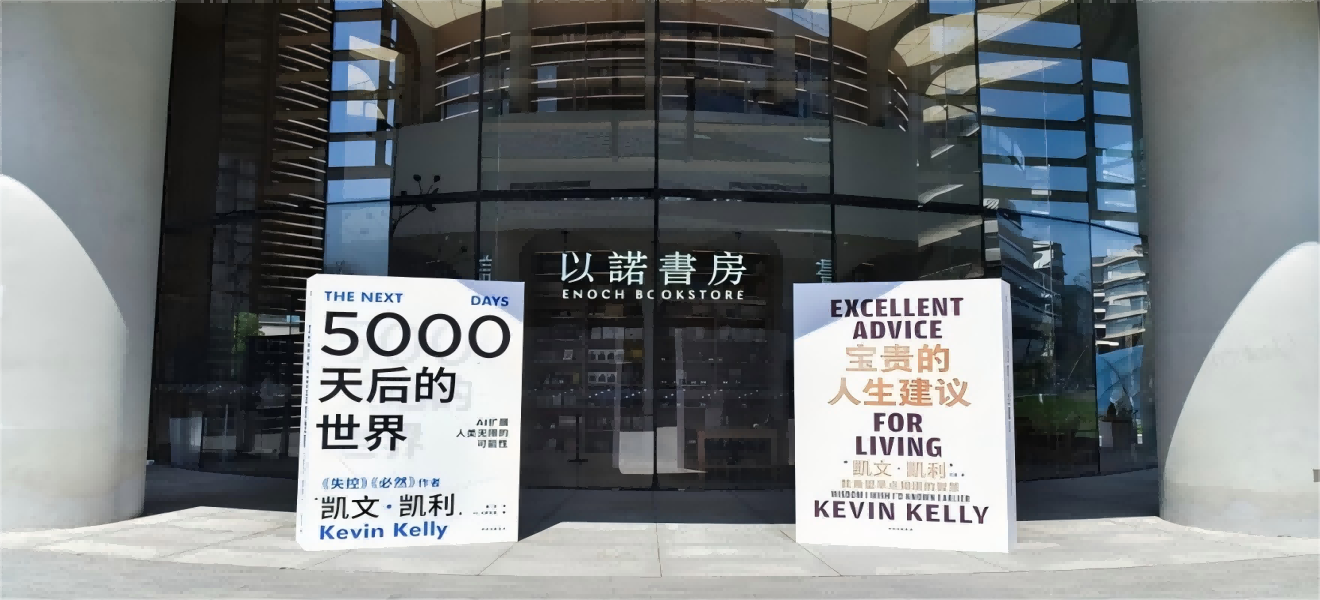
Enoch Bookstore is proud to present its exclusive "Journey Through Books" series, tailored for individuals passionate about reading and investing.
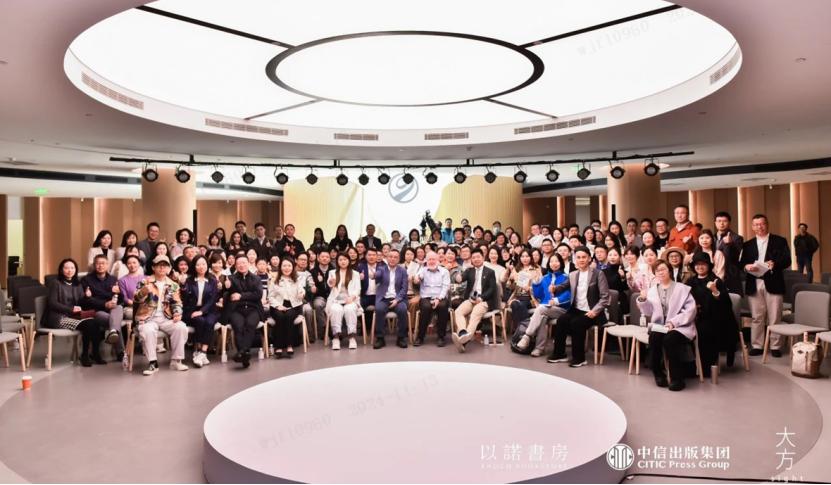
On March 29, 2024, Enoch Bookstore hosted an exceptional event featuring Mr. Kevin Kelly, widely recognized as the "Father of the Internet." Kelly was joined by Mr. Zander Yin, Co-Founder and CEO of Noah Holdings and Chairman of Gopher Asset Management; Mr. Grant Pan, CFO of Noah Holdings and CEO of Noah Hong Kong; and Mr. Chen Wu, Managing Director and Editor-in-Chief of The Economist Global Business Review. The event drew nearly 150 in-person attendees and over 30,000 online viewers, engaging in a dynamic discussion on future trends and insights.
Renowned for his pioneering contributions to the internet industry, Kelly shared valuable perspectives on career navigation in the AI era, understanding emerging trends, and fostering continuous learning and an open mindset. During his presentation, Kelly emphasized the need for a forward-looking, optimistic approach to technology and the importance of long-term thinking from a Chinese perspective.
The event featured simultaneous translation powered by iFlytek AI, aligning seamlessly with the discussions on AI and its implications for the future.

During the welcome address, Yin stated, "At Enoch Bookstore, we strive to cultivate an open and inclusive environment where discussions are authentic and uninhibited. True consensus is not merely about uniformity; it involves seeking common ground in diversity and striking a balance between differing perspectives. This pursuit of meaningful consensus is central to our mission here.” Yin highlighted the event's core themes - wisdom and trends - and noted the transformative potential of AI. "The new infrastructure emerging in the AI era holds enormous potential to drive society forward. Understanding and embracing these trends will be essential for future progress."
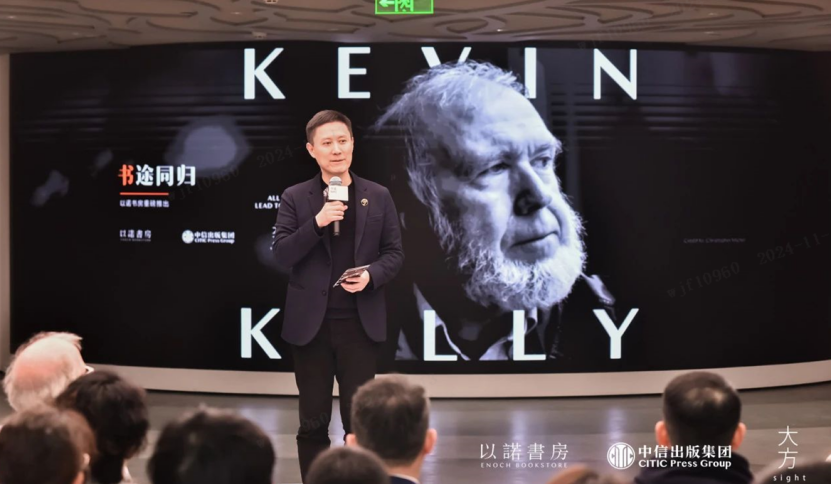
Mr. Zander Yin, Co-Founder and CEO of Noah Holdings and Chairman of Gopher Asset Management
Embrace Uniqueness in the AI Era
During the event, Wu introduced two notable works by Kelly, Excellent Advice for Living and The World After 5000 Days, before posing two thought-provoking questions to Kelly:
§ In this rapidly evolving AI era, what essential skills should individuals focus on developing and mastering?
§ How do you envision the world in 20 years?
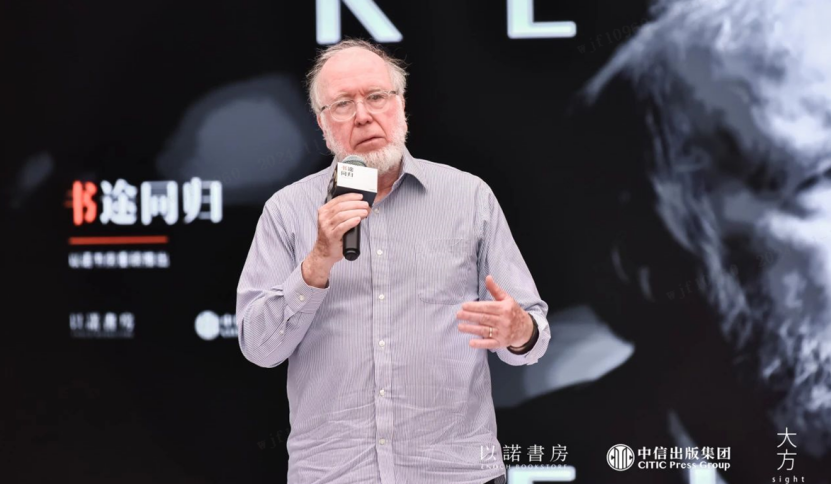
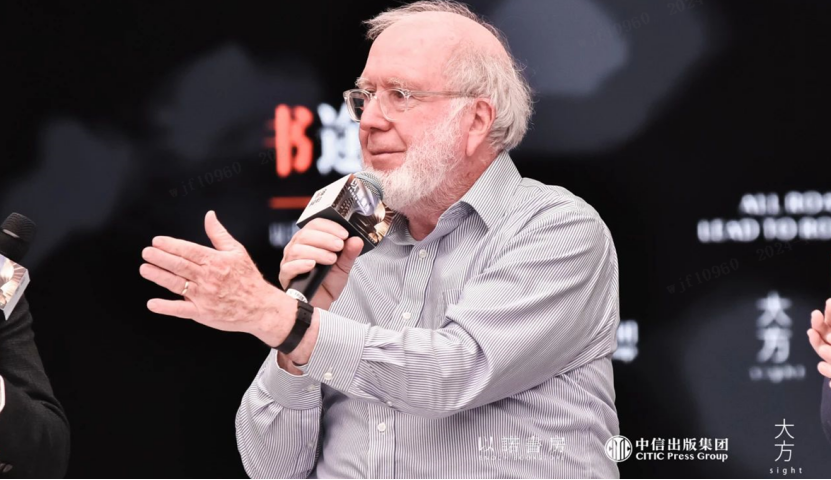
Kevin Kelly
Kelly asserted that in the AI era, it is increasingly important to stand out by being genuinely unique. He encouraged individuals to understand their unique strengths compared to others and consciously develop them. Rather than aiming to be the best, Kelly advocated for being one-of-a-kind, emphasizing that AI can assist with this goal.
To become unique, Kelly offered two recommendations:
1. Embrace Your Quirks: do not lose the eccentricities from childhood that made you stand out; they become the foundation of your strengths as an adult.
2. Embrace AI: Find the tools that best suit your needs and leverage them to enhance your capabilities.
During the panel discussion, Kelly, Pang, and Wu discussed future trends and personal growth before engaging with the audience in a Q&A session where they offered practical advice for young people navigating the AI era.
Valuable Advice for the Next Generation
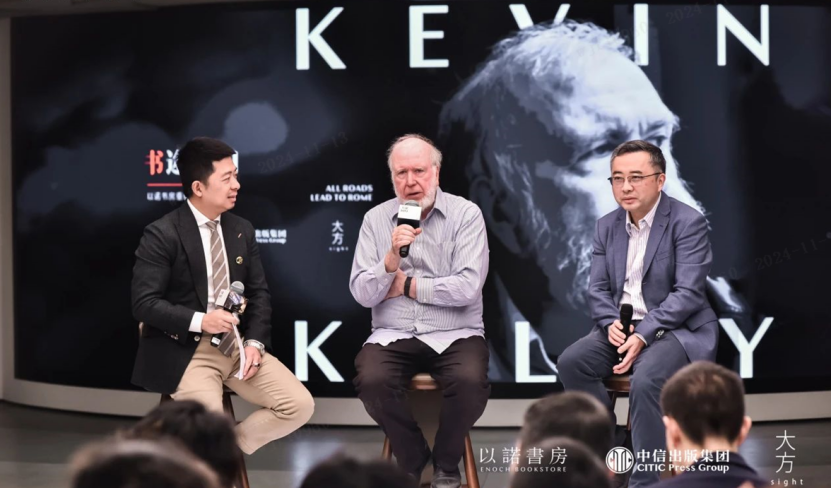
From Left to Right:
Mr. Grant Pan, CFO of Noah Holdings and CEO of Noah Hong Kong
Mr. Kevin Kelly
Mr. Chen Wu, Managing Director and Editor-in-Chief of The Economist Global Business Review
Wu: You mentioned the importance of embracing your childhood quirks. Could you share a personal example? What do you think has contributed most to your success?
Kelly: When I was younger, I built a natural history museum in my basement. I collected insects and imitated their behavior. I’ve always enjoyed creating things with my hands, and that habit has stayed with me. These seemingly odd interests helped me develop practical skills that continue to shape my thinking and writing to this day.
Pan: I noticed on your website that you travel extensively, similar to many of our clients. Would you say that travel has played a key role in your success?
Kelly: Definitely. Travel is one of the most effective and adventurous ways to learn. I enjoy visiting places that maximize cultural and intellectual differences. This exposure opens new perspectives. Travel is especially important for younger generations. We should encourage them to explore diverse cultures and experiences. Young people do not need luxury travel experiences, they need challenging environments that enhance resilience; an experience that helps them grow more confident and adaptable in life.
Wu: Building on your point about preserving childhood quirks, how can we create an environment where children and young people remain curious about the world?
Kelly: Society needs to expand its definition of success and acknowledge a wider range of achievements. This would help nurture diversity and facilitate different paths for personal growth. Parents and communities should support young people in exploring their unique interests, moving away from traditional success metrics. For example, if a child has a passion for something, families can support it by incorporating it into vacations or other activities.
Optimism is a Choice
Pan: One of Noah’s core values is being a "friend of time." I’ve noticed that your organization, the Long Now Foundation, also embraces long-term thinking by encouraging people to consider the interests of future generations when making decisions today. With the rapid acceleration of technology and the fast pace of modern life, how do you approach thinking about the future today?
Kelly: No one can truly predict the future, but what we can do is consider multiple possible scenarios. There isn’t just one future. By imagining several paths, we can avoid being caught off guard. Looking back over the last 40 years of economic growth, we see that the economy will likely slow down, while technology will continue to advance rapidly. The development of industries will follow three main trends: exponential growth, linear growth, and stagnation. It’s a complex world, so we need to stay adaptable and keep learning throughout our lives, especially in uncertain times.
Wu: You’ve written extensively about wisdom and describe yourself as an extreme optimist on your website. Can you explain what that means?
Kelly: In today’s world, there’s a real need for more positive energy. I define optimism not as an inherent trait but as a conscious choice. I choose to be an extreme optimist. I encourage everyone to stay optimistic, take calculated risks, and use that positivity to fuel personal and professional growth.
Audience Question: How do you view the issue of AI consistency? Do you think we should slow down AI development to ensure it doesn’t spiral out of control?
Kelly: The issue of AI consistency is often framed as making sure AI stays aligned with our goals as it becomes more intelligent, and that it doesn’t try to take over or disrupt us. But there’s already a consistency challenge we face with our children: how do we make sure the younger generation remains aligned with the values of the previous one? The answer is to instill strong values. For AI, that means giving it a moral code, which isn’t as difficult as it seems. The real concern should be human consistency, how we prevent bad actors from using AI maliciously. If we, as a human society, can agree on how to use AI, we’ll have a much better chance at making it work for us.
Pan: On behalf of our clients, many of whom are guiding the next generation of their families, I have a question. With AI accelerating so rapidly, what fields should the younger generation pursue to stay competitive when they graduate?
Kelly: I don’t think it matters much which specific field they choose. What’s most important in the future is the ability to know what to learn, to continuously optimize that learning, and to embrace lifelong learning. That mindset will be their true competitive advantage.
Audience Question: How can teenagers maintain a positive mindset in the face of a pessimistic outlook on AI’s impact on the future?
Kelly: I’m personally driven by the joy of learning new things, and I encourage others to stay curious about the unknown. For young people, it’s important to maintain flexibility in their thinking and recognize the opportunities that technological advancements bring. With the constant change in technology, there will always be new chances to grow and innovate.
The future is filled with uncertainty, but we can respond by staying flexible and open-minded, adjusting our thoughts as things unfold. It’s important not to get ahead of ourselves and try to control the future. Instead, we should embrace uncertainty, remain optimistic, and focus on the opportunities ahead. Being open to change is what will allow us to thrive in the future.