
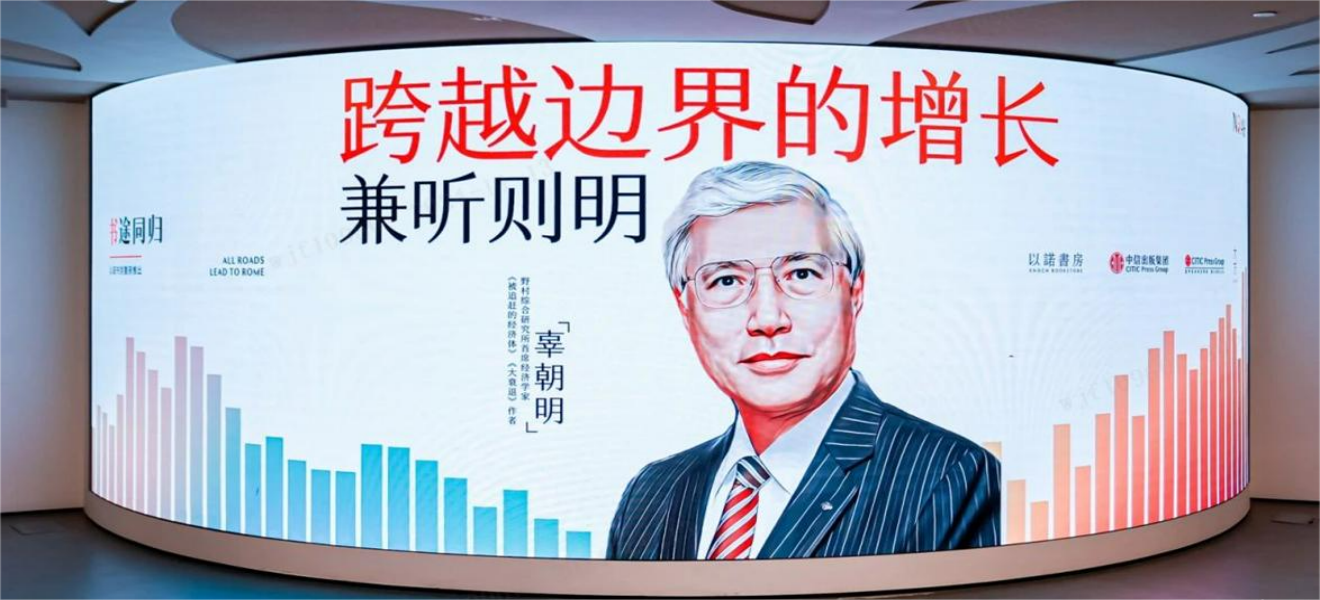
"Book Journey Together" connects not only with books but also authors and publishers, bringing to light the ideas and wisdom they impart. We aim to leverage top-tier resources to share this knowledge with our clients, enabling them to understand the latest economic trends, social sciences, cultural information, and theories, and to benefit from these learnings.
Noah believes exploration, communication, and listening breathe life into reading. We began to consider whether, through the Enoch Bookstore, we could connect with like-minded individuals who share the same pursuit and passion for reading, achieving the beautiful vision of a "Book Journey Together".
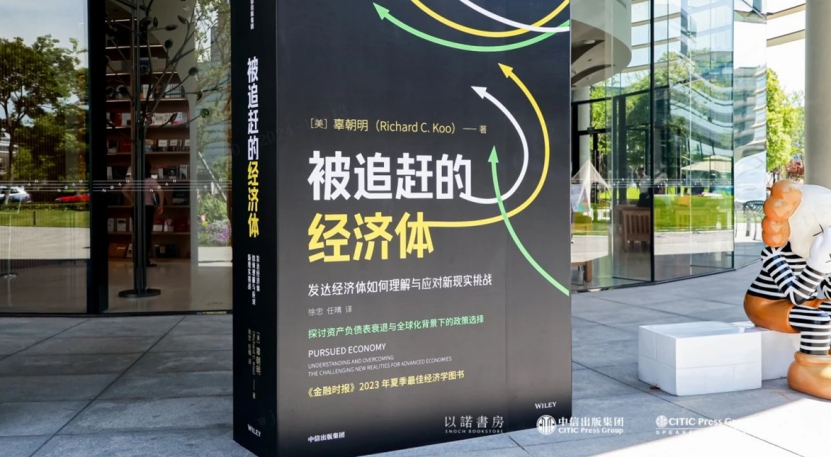
On May 9th, the Enoch Bookstore was honored to invite Professor Richard Koo, Chief Economist of the Nomura Research Institute, to engage the audience in an in-deep dialogue entitled "Growth Beyond Borders: Listening for Clarity."
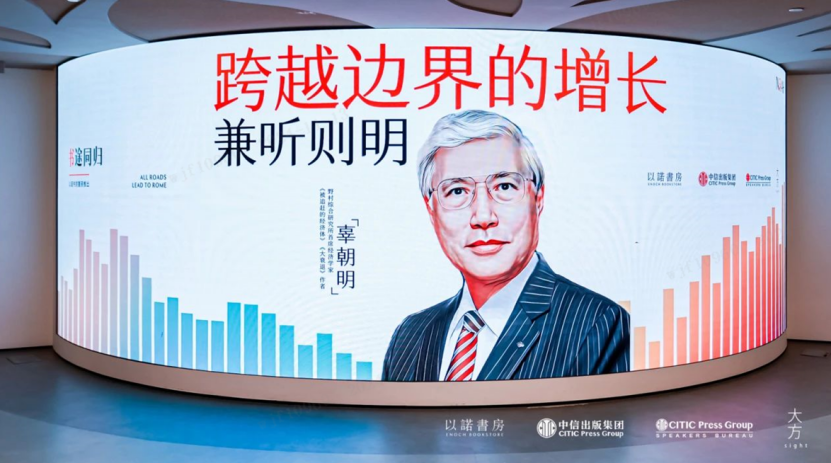
Professor Richard Koo has been recognized as one of the most trusted economists by capital and financial market professionals in Japan. He has provided consultation to several Japanese prime ministers on addressing Japan's economic and banking issues. During the discussion, Professor Koo elaborated extensively on his theories of "Balance Sheet Recession" and the concept of "Pursued Economy." Additionally, he shared his unique insights on market issues and strategies, individual and corporate investments, assessments of Japan's market potential, economic trends, recommendations and more. He also summarized the experiences and lessons that China can learn from Japan's economic downturn.
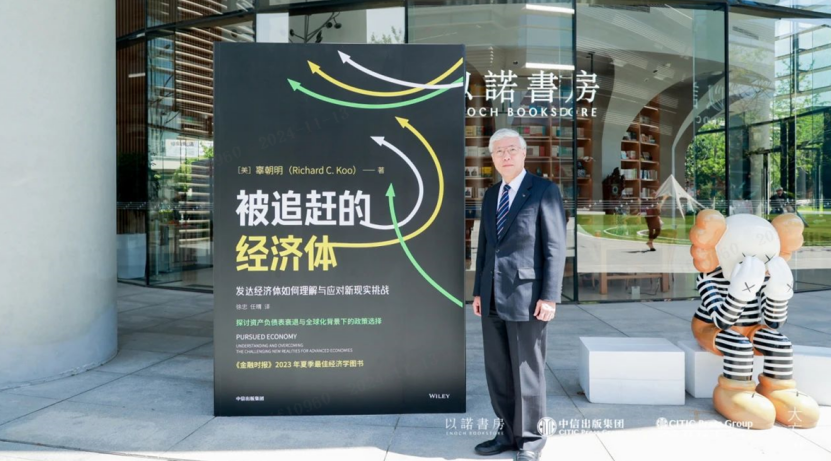
Professor Richard Koo posing with his book Pursued Economy
Mr. Grant Pan, CFO of Noah Holdings and CEO of ARK Hong Kong, delivered a welcome speech to the attendees. He stated that the N+ Enoch Bookstore "Book Journey Together" private sharing session aims to create an open, inclusive, and diverse environment. Consensus is not simply about agreement; it is about seeking common ground within diversity and finding balance amid differences. "Growth Beyond Borders" should not only be a strategy for companies seeking new growth points but also a core concept for global asset allocation. Investors need to transcend traditional thinking by deeply analyzing the development trends and interconnectedness of different economies to identify the potential of emerging markets and the stability of mature economies. This cross-border perspective helps investors find oases of growth in the wave of globalization while avoiding potential risks. Global asset allocation strategies should integrate macroeconomic analysis, geopolitical considerations, and an understanding of cultural values to achieve robust long-term returns.
In his keynote speech, Professor Koo pointed out that the logic and reasons behind economic recessions are closely related to savings and spending. Balancing savings and borrowing is crucial for the economy’s overall development. When companies cannot achieve this balance on their own, government intervention becomes necessary. "When the government borrows and spends, it can help the economy recover and grow, which is a lesson we can learn from Japan's situation."
Professor Koo also introduced the concept of the "middle-income trap" along with case analyses. He suggested that for China to escape this trap, the country needs to work diligently to optimize investment and business conditions to attract foreign investment. Professor Koo stated, "Once China fully understands the challenges it currently faces, I believe it has the capability to effectively address these issues."
Through Professor Koo's analysis, one can observe the development trends of various global economies and their interconnectedness. To truly find oases of growth in future global asset allocation, it is essential to deeply analyze these economies' trends and understand their development dynamics. This approach will help in avoiding risks and conducting more thorough analyses of multiple economies.
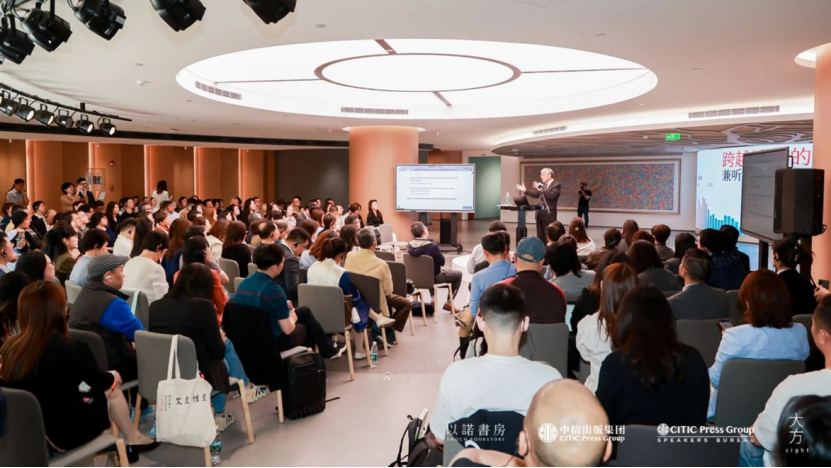
During the discussion segment, Professor Koo and Mr. Melo Xi, head of Noah's Global Capital Markets Group, engaged in an in-depth exploration of market issues, economic trends, and other topics. Below are some selected highlights from their insightful Q&A, which we hope will stimulate your thinking.
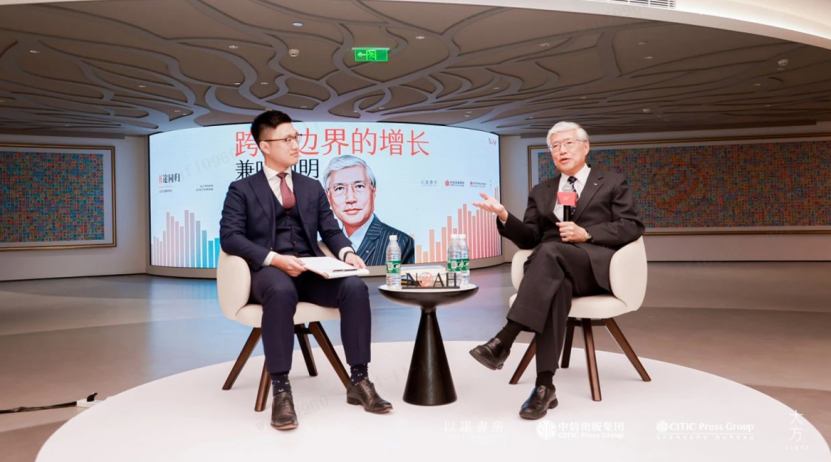
Professor Richard Koo (right)
Mr. Melo Xi, head of Noah's Global Capital Markets Group (left)
Pursued Economy
Melo Xi: In the wave of economic development in China, the investment community has played a very important role in driving progress. Your observations and research on Japan and global economies, including the theories of “Balance Sheet Recession” and “Pursued Economy”, have resonated greatly worldwide. Could you please provide a brief introduction?
Professor Koo: The theory of " Pursued Economy" is based on my personal experience. When an economy is in the process of being pursued, it needs to flexibly adjust its policies, such as changing its macroeconomic and microeconomic policies. This is necessary because, compared to merely catching up with other economies, policies must be adjusted accordingly.
Melo Xi: According to your theoretical framework, do you believe that China has crossed the turning point of its golden age and become a pursued economy?
Professor Koo: Certain industries in China are indeed being pursued, as they are relocating their companies to countries with lower costs. However, many Chinese companies remain highly competitive globally. If overseas markets welcome Chinese products and brands, then China may not become a pursued economy. As long as China continues to implement technological innovation, it can sustain its pursuit of other leading economies.
Future Growth Points
Melo Xi: Let's discuss your assessment of the potential of the Japanese market. We often describe the mindset of young people in Japan as a "low-desire society." A generation that has experienced recession and balance sheet recession may take a whole generation to restore confidence in the market. What changes do you think Japanese consumers and investors have undergone after experiencing the Great Depression? Additionally, what advice do you have for companies and investors that are already investing in Japan?
Professor Koo: The aspect of investing in Japan indicates that China has indeed become a pursued economy, as Chinese entrepreneurs are now investing in foreign economies. When an economy becomes a pursued economy, consumer attitudes undergo a 180-degree transformation. During Japan's golden era, when it was catching up to Europe and the U.S., Japanese consumers did not care about prices and were very willing to spend on expensive luxury goods.
However, when an economy enters a pursued phase, investment from previously invested countries tends to decrease, and wages do not rise but remain stagnant, which means people's mindsets must adjust. Most Japanese individuals begin to shop at discount stores for good-quality, affordable items, a trend that has also occurred in the U.S.
On the other hand, in Japan, education becomes increasingly important during that pursued phase, even more so than during the golden period. Finding job opportunities becomes more difficult, requiring higher qualifications to secure a position, which shifts the focus of education. Therefore, the education sector becomes very significant and opportunities become increasingly important. These are the changes I believe companies should recognize and pay attention to.
Melo Xi: In the context of economic slowdown, many people view artificial intelligence and other new technologies as a stimulus for the economy and see them as a new hope for future growth. China also emphasizes high-quality development, marked by a significant increase in total factor productivity, characterized by innovation and a focus on quality. However, breakthroughs in new technologies often rely on entrepreneurial spirit and innovation. Do you think we should be optimistic about this perspective, or should we approach it with caution?
Professor Koo: When considering whether to invest in new machines, AI, or software, if you believe there will be a return on investment, then you will invest. However, there are many other factors to consider, and different decisions need to be made based on the risks associated with these factors. What governments can do is provide a safe environment to stimulate investment behavior. If people perceive high risks, they are less likely to invest. A safe and healthy environment is essential for encouraging investment.
Melo Xi: The current international geopolitical situation is vastly different from the environment faced by Japanese companies in the past. What can Chinese entrepreneurs learn from this?
Professor Koo: When Japanese companies sought to expand beyond Japan, they inevitably faced a series of issues related to exchange rates, and at that time, Japan had a significant trade surplus. If a country has a large trade surplus, it means that other countries are running deficits, and those deficit countries will not be satisfied with the situation. As a result, companies looking for solutions began to gradually expand out of Japan. Now, China is also the largest trade surplus country. If China continues to invest in manufacturing and increase exports, I worry that countries with substantial trade deficits may feel dissatisfied and respond by raising tariffs. I believe that free trade has been a crucial factor in helping China’s economy grow to its current state, so China needs to be vigilant about the risk of tariff barriers.
After the reading session, Professor Koo held a book signing and discussion for his work Pursued Economy. Attendees participated enthusiastically, showcasing great interest and excitement.