
In an era defined by uncertainty, global markets are navigating unprecedented volatility and transformation, leaving investors seeking clarity on the path forward.
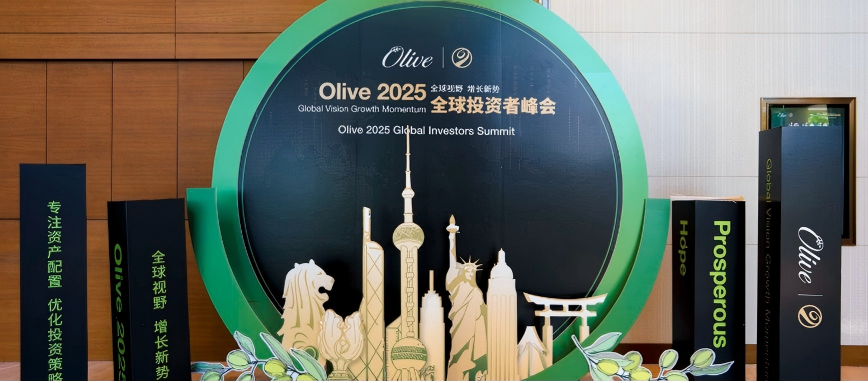
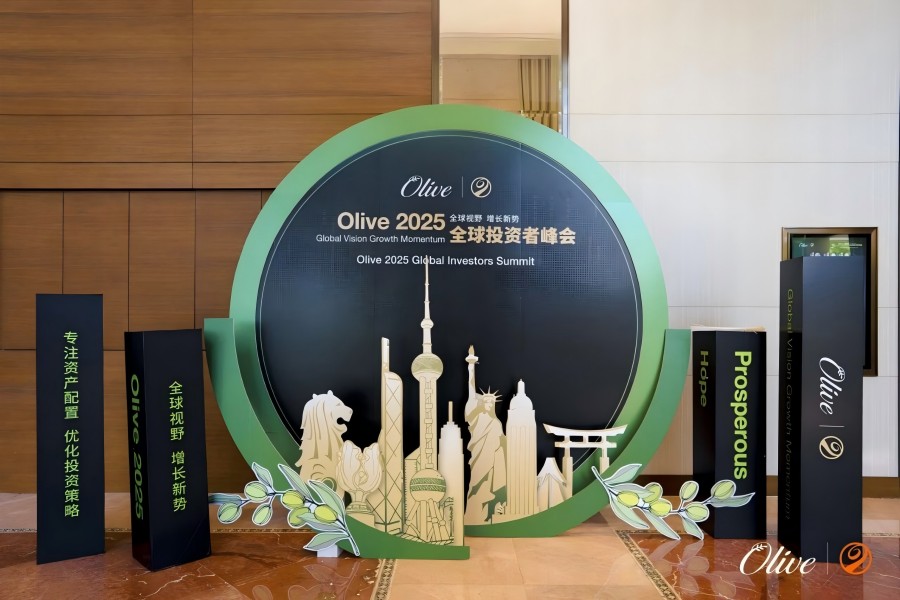
It was against this backdrop that Noah’s Olive Asset Management hosted its “2025 Global Investor Summit” in Hong Kong. Centered on the theme “Global Vision, New Momentum for Growth,” the summit featured Olive’s executive team alongside leading global managers from firms like Goldman Sachs, Graham Capital, Macquarie, Schroders, Wellington Management, ExodusPoint Singapore, and HashKey Group for an in-depth dialogue on market dynamics and future opportunities.
The consensus? While short-term fluctuations persist, a look at the medium-to-long term reveals new opportunities quietly taking shape. A crucial window for strategic positioning is opening in sectors such as European credit, emerging market equities, and digital currencies.
Noah ARK has distilled the core insights from the summit, identifying key market risks and potential opportunities to illuminate a strategic path forward for wealth managers.
Olive: Embracing the Wave of AI Investment
Through our full-discretion investment model, we uphold a philosophy of professionalism and precision, using systematic intelligence to transcend the limitations of individual decision-making.
Zander Yin, CEO of Noah Holdings, opened the summit by addressing a critical challenge facing China’s successful entrepreneurs: the preservation of wealth and its seamless transfer to the next generation.
He outlined that to navigate this pivotal stage, entrepreneurs must master three essential lessons.
1. Building a “Dual-Circulation” in Business Operations
The first lesson involves establishing a dynamic dual-circulation model. In an era of heightened geopolitical tensions, rising trade barriers, and supply chain restructuring, the traditional model of “domestic production for global sales” is no longer sufficient. Businesses must go global. This means not only solidifying their domestic market presence and securing their supply chains but also actively expanding internationally through overseas manufacturing, mergers and acquisitions, and collaborative R&D. This strategy mitigates single-market risks and fuels long-term, sustainable growth.
2. Embracing the Internationalization of Family Human Capital
The second lesson is to embrace a global mindset. As global education becomes more accessible to the next generation, many children of entrepreneurs study abroad, gaining specialized knowledge and a worldly perspective. If the founding generation doesn’t also embrace an international outlook, a significant values gap can emerge. It is therefore crucial for the founders to engage in international learning and exchange, bridging this cognitive divide to ensure a smooth and successful succession.
3. Advancing the Globalization of Asset Allocation
Finally, the third lesson is the necessity of global asset allocation. Concentrating investments in a single market leaves a portfolio vulnerable to economic fluctuations and currency risks. A global approach, however, diversifies these risks and optimizes the portfolio’s structure. Recognizing this fundamental need, Olive leverages its global offices and sophisticated research framework to connect clients with top-tier asset managers. Our comprehensive database supports efficient, data-driven decisions, delivering professional and holistic asset allocation solutions for entrepreneurs.
Jing Peng, Global CEO of Olive Asset Management (“Olive”), highlighted the transformative power of AI.
“AI represents a ‘cognitive revolution’ on par with the Industrial Revolution,” she explained. “Its fundamental value is its ability to automate, scale, and specialize human knowledge and cognitive processes, unlocking entirely new opportunities for the investment world.”
For investors grappling with challenges like information overload, high barriers to entry, and the complexities of cross-market operations, Olive’s full-discretion services offer a seamless, one-stop solution. Our expert team executes a three-dimensional allocation across asset classes, countries, and categories to hedge against single-market risks while dynamically adjusting portfolios to align with powerful secular trends like AI.
AI stands as a central theme in modern asset allocation and is a long-term focus for Olive. During a dedicated panel, our US team shared that the American private market has become a core arena for AI investment. The revenue growth of private AI companies in the US is far outpacing that of their public counterparts; some “AI-native” enterprises have seen their revenue leap from US$1 billion to US$2 billion in as little as two months.
To capitalize on this wave, investors can leverage the expertise of professional teams within a fund of funds to diversify risk and target sectors like AI-powered healthcare. Alternatively, they can utilize flagship funds to take significant positions in leading AI giants, securing access to scarce allocations in the most promising ventures.
As global economic cycles become more pronounced, investor demand for assets that offer stable, counter-cyclical returns has surged. Infrastructure, with its steady cash flows and manageable risk profile, has emerged as a cornerstone of modern portfolios.
It serves as a key allocation for navigating economic shifts. Because infrastructure assets underpin essential public services and core industries, their returns demonstrate remarkable stability across different cycles. Over the past two decades, even during periods of extreme public market volatility, infrastructure investments have delivered reliable cash flow, secured by their intrinsic asset value and clear contractual agreements.
This resilience is particularly valuable in an inflationary environment. Through cost pass-through mechanisms, many infrastructure assets can mitigate the impact of rising costs, protecting returns and making them an essential tool for institutional investors seeking to balance risk in a complex landscape.
Looking ahead, Macquarie identifies the transition toward digitalization and electrification as a powerful, long-term trend in the infrastructure space. These sectors are characterized by 10-to-30-year investment cycles in heavy assets. While still in their growth phase, their long-term potential is undeniable.
Macquarie shared three core pillars of its investment strategy:
1.Adherence to “Bottom-Line Thinking.”
Macquarie’s risk assessment begins with a “worst-case scenario” analysis. By evaluating contractual revenues, cost controls, and management team capabilities under stress, they establish a clear margin of safety for every asset.
2.A “Platform + Ecosystem” Approach.
The firm focuses on building integrated industrial platforms, likened to growing an “apple tree.” This involves consolidating resources and assembling specialized teams to create a self-sustaining ecosystem that can adapt to external shifts, such as policy changes, without deviating from its core investment thesis.
3.A Focus on “Client Synergy + Regional Expansion.”
Macquarie’s strategy often begins with a small-scale platform, expanding into new countries and regions in collaboration with key anchor clients. This approach facilitates rapid growth, leading to high-value transactions and a portfolio that is dynamically adjusted to align with evolving market cycles and trends.
European Private Credit: A Window of Opportunity
As the global landscape shifts, making regional investment decisions more challenging, Europe presents a compelling opportunity. The market’s dynamic and complex nature, while creating barriers to entry, also allows more sophisticated institutions to achieve substantial returns.
With many European nations now implementing fiscal stimulus, the continent’s economy may be at an inflection point for growth. Furthermore, euro-denominated assets offer valuable diversification for global portfolios.
Goldman Sachs highlighted private credit as a particularly attractive category. While Europe may not offer explosive growth, its inherent stability aligns perfectly with the objectives of private credit, which focuses on businesses with the capacity to consistently service their debt. This focus insulates returns from public market volatility and can deliver superior long-term performance compared to public bonds.
The timing is also opportune. With European interest rates currently stable, the net returns on private credit are significantly outpacing yields in the public bond market, creating a prime window for investment. Even in the face of future market volatility, top-tier managers who maintain a disciplined approach — focusing on core fundamentals like cash flow and scale — can continue to generate significant value for investors.
With a legacy spanning 220 years, Schroders Group has established deep roots in the Asian market, having operated in mainland China since 1994 and Hong Kong for over 50 years. The group currently manages approximately RMB1 trillion in assets, with 25% originating from the Asia-Pacific region. This is divided between two main pillars: RMB900 billion in public funds and over RMB100 billion in private funds.
Schroders maintains a focused investment approach, requiring its teams to deeply cultivate expertise in one of five key sectors — healthcare, technology, consumer, services, and industrials. To address the challenge of illiquidity common in private equity, Schroders has been a pioneer, becoming one of the first three institutions in the industry to launch innovative semi-liquid private equity funds.
The firm’s core advantages are threefold:
1.Innovative Semi-Liquid Structure: This design breaks the constraints of traditional long-term lock-up periods, offering investors flexible redemption options while still targeting attractive returns, effectively balancing profitability with liquidity.
2.Decades of Experience: Drawing on over 30 years of private equity expertise, the firm employs a global private equity strategy, providing access to top-tier deal flow worldwide, supported by localized teams that safeguard investment quality.
3.Operational Efficiency: A streamlined and transparent operational process enhances capital efficiency, lowers the barrier to entry for investors, and reduces information asymmetry.
Strategically, Schroders favors a “Global Allocation + Category Diversification” approach to building resilient portfolios.
Graham Capital, founded in 1994, has long specialized in the world’s most liquid markets, mastering both discretionary and quantitative trading strategies. As of April 2024, the firm managed nearly US$22 billion in assets.
A hallmark of Graham Capital’s macro strategy is its dynamic flexibility, allowing it to expertly navigate and capitalize on interest rate and currency movements driven by policy shifts, geopolitical events, and other catalysts. Their ‘Diversified Alpha’ strategy is thoughtfully constructed: 70% of capital is allocated to macro strategies, while the remaining 30% is dedicated to strategies designed to reduce overall portfolio volatility and correlation.
The fund is guided by a handpicked team of 11 “star” managers, each with over 15 years of experience and employing strategies that exhibit low correlation to one another. Risk management at Graham Capital is rigorous and systematic. A risk committee convenes daily at 8:30am US time to conduct a deep-dive review of all portfolios and strategies. To prevent strategy overcrowding, the firm deliberately selects managers with diverse styles, ensuring that correlations between them are either negative or near-zero. This structure prevents the performance of any single manager from disproportionately impacting overall returns, creating a robust defense for the portfolio.
In today’s complex and opportunity-rich environment, investors face a daunting set of questions. Amid global market turbulence, should one chase the highs in AI and the Nasdaq? Is it time to diversify away from the US dollar by allocating to Europe or Japan? And in the process, are we overlooking this year’s standout sectors, like traditional finance and energy?
It is in this environment that Wellington Management’s hedged investment strategy proves particularly well-suited. By allocating across more than 10 distinct underlying hedge funds, the strategy aims to capture global equity returns while actively managing volatility. Over the past five years, it has delivered double-digit returns with well-controlled volatility and maximum drawdowns, demonstrating outstanding downside protection with declines far smaller than the broader market during periods of extreme stress.
Wellington operates with a unique structure, forgoing a single chief investment officer in favor of a manager-and-factor research team. This model ensures both investment flexibility and discipline. The process for selecting and allocating to underlying funds is rigorous, with key strategies — such as European long-short, energy long-short, and financial long-short funds — offering investors stable options in the current macro climate. To ensure preparedness, Wellington’s team conducts daily extreme scenario tests on the portfolio’s overall positioning, simulating events like a repeat of the 2008 financial crisis. These stress tests provide a deep understanding of the fund’s potential risks, reinforcing its resilience in the face of unforeseen events.